
What Waiting Until the First Freeze Actually Costs You
A garage door that works fine on a mild October afternoon can fail the first morning it's 28 degrees and glazed with ice. Springs that were already fatigued from a long, humid summer tend to snap in a cold snap, not in July. Weatherstripping that cracked in the sun months ago lets freezing air, meltwater, and wind-driven rain straight into the garage. If that garage is attached to the house, that's a direct hit to your heating bill all winter. And if a spring lets go or the opener quits on the one morning you actually need the car, you're not scheduling a routine visit anymore — you're paying for an emergency call during the worst possible week to get one. None of that is necessary if the door gets a real look-over now, while the weather still cooperates.
What This Stretch of Tennessee Weather Does to a Garage Door
Garages around here take a beating in ways that aren't obvious until winter exposes them. Heavy summer rain and thick humidity swell wood trim and door panels. Pine sap and pollen build up inside the tracks and rollers, especially on properties with mature pine trees near the garage. Remnants of tropical systems that track inland add extra moisture on top of all that. Then the temperature drops, occasional ice storms move through, and everything that was loose, cracked, or gunked up suddenly becomes a real problem: metal contracts, rubber stiffens and splits, and lubricant that washed away months ago leaves moving parts grinding instead of gliding.
Inspect and Lubricate Every Moving Part
Rollers, hinges, and the track itself should move smoothly with no grinding or hesitation. Wipe down the tracks first — pine sap and pollen residue from summer tend to collect there and attract grit, which wears rollers faster. Use a silicone-based garage door lubricant rather than a general degreaser like WD-40, which tends to attract more dust and sap than it repels. While you're at it, check steel hardware for surface rust that can form after a summer of high humidity; a little rust on hinges now can seize up in cold weather later.
Check the Springs Before a Cold Snap Hits
Torsion and extension springs lose tension gradually, and cold makes a weakened spring far more likely to fail outright. Watch for warning signs: the door looks crooked as it opens, it shudders or jerks partway through the cycle, or you hear a loud bang from the garage (often a spring letting go). Springs are under extreme tension and are genuinely dangerous to handle without the right tools and experience — this is one job worth leaving to a technician rather than tackling with a ladder and a YouTube video.
Replace Worn Weatherstripping and the Bottom Seal
After a summer of heavy rain, the rubber seal along the bottom of the door and the stripping around the frame are often cracked, torn, or pulled loose. In winter, that gap is how cold air, ice melt, and wind-driven precipitation get into the garage — and from there, into an attached mudroom or laundry room if that's how the house is laid out. Fresh weatherstripping is inexpensive relative to the heat loss and moisture damage it prevents, and it's a quick fix while the weather still allows for it.
Test the Opener and the Safety Sensors
Cold weather is hard on opener motors, especially if the lubricant inside has thickened or the unit hasn't been checked in a while. Test the opener through a few full cycles and listen for straining or hesitation. Check that the photo-eye safety sensors are still aligned — humidity swelling the frame over the summer, or a bump from a lawnmower or bike, can knock them just far enough out of position that the auto-reverse safety feature stops working. Replace remote and keypad batteries now, before a winter power outage leaves you relying on manual backup.
Look for Moisture Damage Around the Door and Frame
Garages near pine trees collect needles and sap in the corners and along the threshold, and that debris holds moisture against the framing. Check the bottom panel and door frame for soft spots, swelling, or rot, particularly on wood doors or wood-trimmed openings. On steel doors, look at the bottom corners for rust bubbling under the paint. Catching this now means a repair; catching it in February after an ice storm usually means a replacement.
When to Call Watertown Garage Door Works
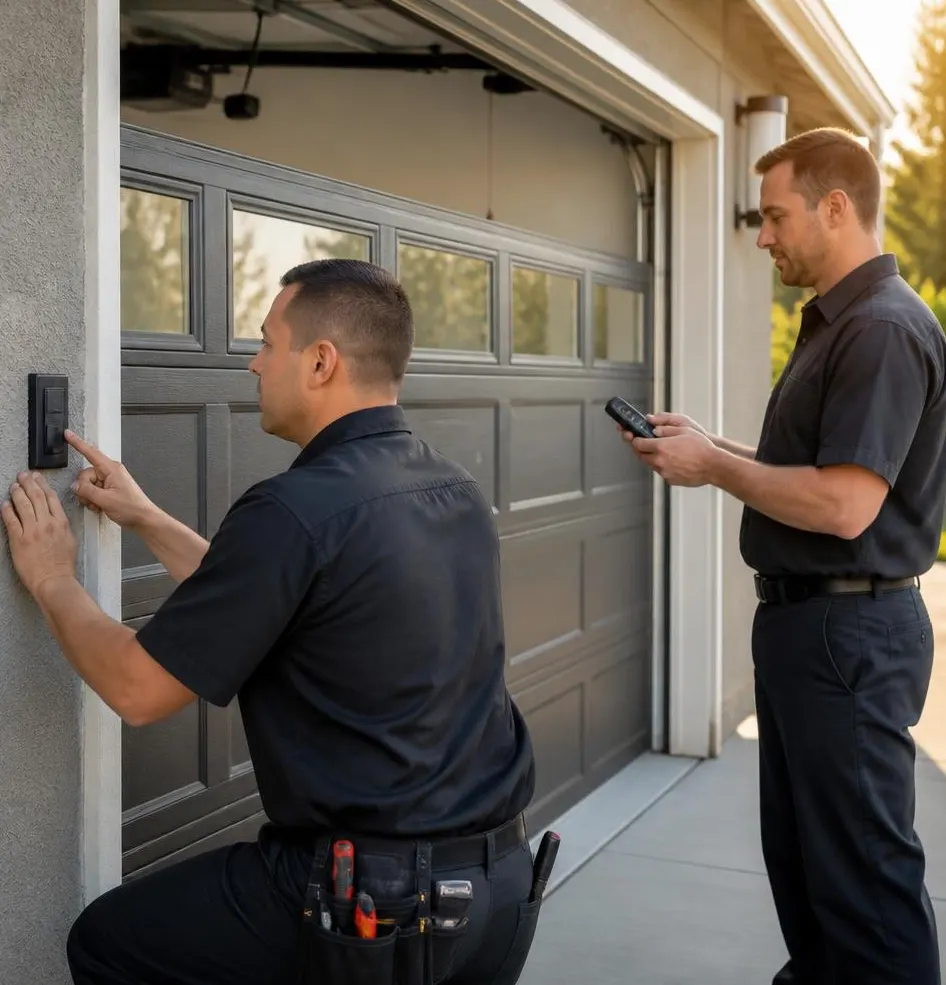
If you're seeing a spring that looks stretched or uneven, a door that won't close all the way, an opener that hesitates or reverses for no reason, or seals that are too far gone to patch, it's time to get a technician out rather than keep testing your luck through the cold months. Watertown Garage Door Works handles exactly this kind of pre-winter check: a full inspection of springs, cables, and hardware, Spring Replacement with the correct spring size and tension for your specific door weight, and Garage Door Maintenance that covers lubrication, track alignment, weatherstripping, and opener testing in one visit. We serve homeowners throughout Watertown, Lebanon, Mount Juliet, Carthage, Alexandria, Smithville, Gordonsville, and Statesville, and we show up when we say we will.
If your garage door hasn't been looked at since last spring, now is the window to fix that before the first hard freeze finds the weak spot for you. Call Watertown Garage Door Works today to schedule a pre-winter check for your Watertown, TN home.